CAPES Global.Edu Program at UFPR
Global South 2030 Network for Scientific Cooperation and Sustainable Development
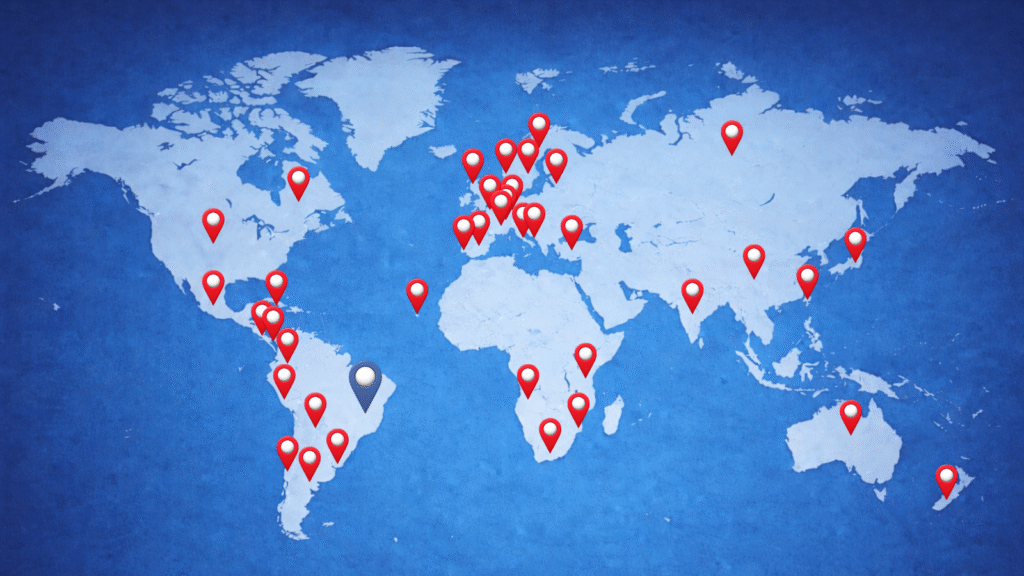
The Global South 2030 Network for Scientific Cooperation and Sustainable Development is a strategic initiative coordinated by the Federal University of Paraná with the aim of promoting collaborative internationalization between institutions from different regions of Brazil, in partnership with foreign institutions. The proposal is aligned with the objectives of the PNPG (National Postgraduate Plan) 2025-2029. This portal brings together key information about the proposal, actions, opportunities, and ways to participate. This page is also available in Portuguese.

ASSOCIATED HEIs/IPs
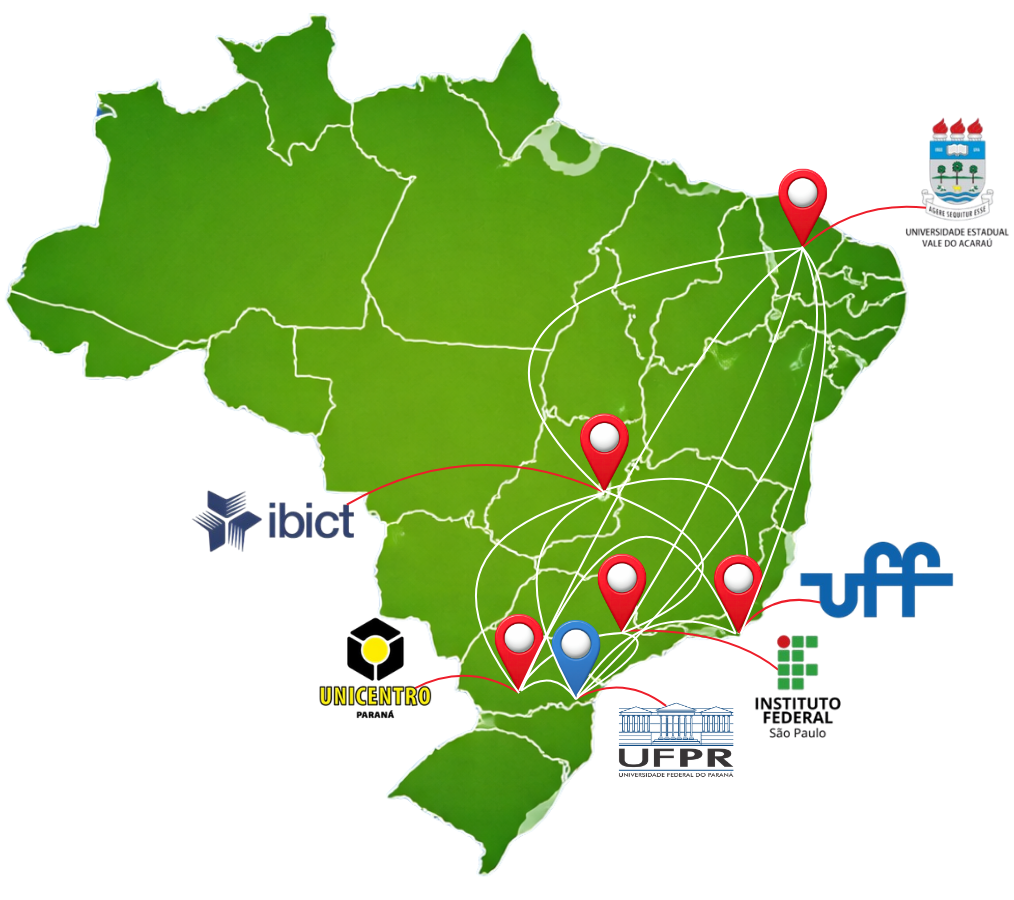
In addition to UFPR, the coordinating HEI of the Sul Global 2030 Network, five institutions comprise the network as associates:
- VALE DO ACARAÚ STATE UNIVERSITY (Northeast)
- STATE UNIVERSITY OF MIDWEST (South)
- FLUMINENSE FEDERAL UNIVERSITY (Southeast)
ABOUT THE NETWORK
Steering Committee
The Steering Committee will be the deliberative and strategic body responsible for the overall coordination of the Network, defining guidelines and making decisions that guide its implementation.
It is composed of institutional representatives from the HEIs that are part of the Network, including a pro-dean (or equivalent) and a member of the international relations office from each participating institution.
The chair of the Steering Committee is held by Prof. Edneia Amancio de Souza Ramos Cavalieri, Pro-Dean of Graduate Studies at UFPR.
Themes and Research Projects
In a series of meetings between researchers and the vice-presidencies, three thematic areas were identified to guide the network’s international research:
Graduate Programs
The network includes 88 graduate programs, 69 of which are at UFPR. Each graduate program’s participation in the themes and projects can be viewed in the spreadsheet below:
Governance Plan
The Global South 2030 Network will work cooperatively to reduce regional and institutional asymmetries in the development of internationalization, considering the academic maturity of each HEI/IP, its infrastructure, and the current status of its international integration.
Based on the planned actions, activities will be prioritized considering: 1) proposed objectives, 2) infrastructure and logistical support necessary for implementation, 3) visualization of the results of the actions, considering long-term planning for data collection.
The Network will also have a permanent program for the exchange of internationalization management practices between hubs, campuses, and administrative units, and will implement an integrated system for sharing and disseminating scientific and technical knowledge, in line with open science and collaborative information management policies, strengthening the institutional capacity of Network members.
The communication of the Global South 2030 Network will be structured as a strategic axis for institutional strengthening and consolidation of Brazil’s presence on the international scientific scene. The proposal has an integrated and collaborative approach between institutions and promotes the circulation of information, results, and experiences that express the regional and thematic diversity of cooperation.
With regard to control, monitoring, and risk management, the Network’s actions will be conducted collaboratively, based on a continuous cycle of planning, execution, verification, and improvement (PDCA). The process will ensure systematic monitoring of the Action Plan’s goals and results, in coordination between the Steering Committee, responsible for strategic supervision, and the Administrative Committee, responsible for consolidating and analyzing technical, financial, and operational data.
Monitoring will adopt a participatory methodology, allowing all institutions to contribute to the identification of risks and solutions. Management tools such as SWOT and GUP (Severity, Urgency, and Probability) analysis will be used to prioritize corrective actions and optimize execution.
ACTIONS
Events
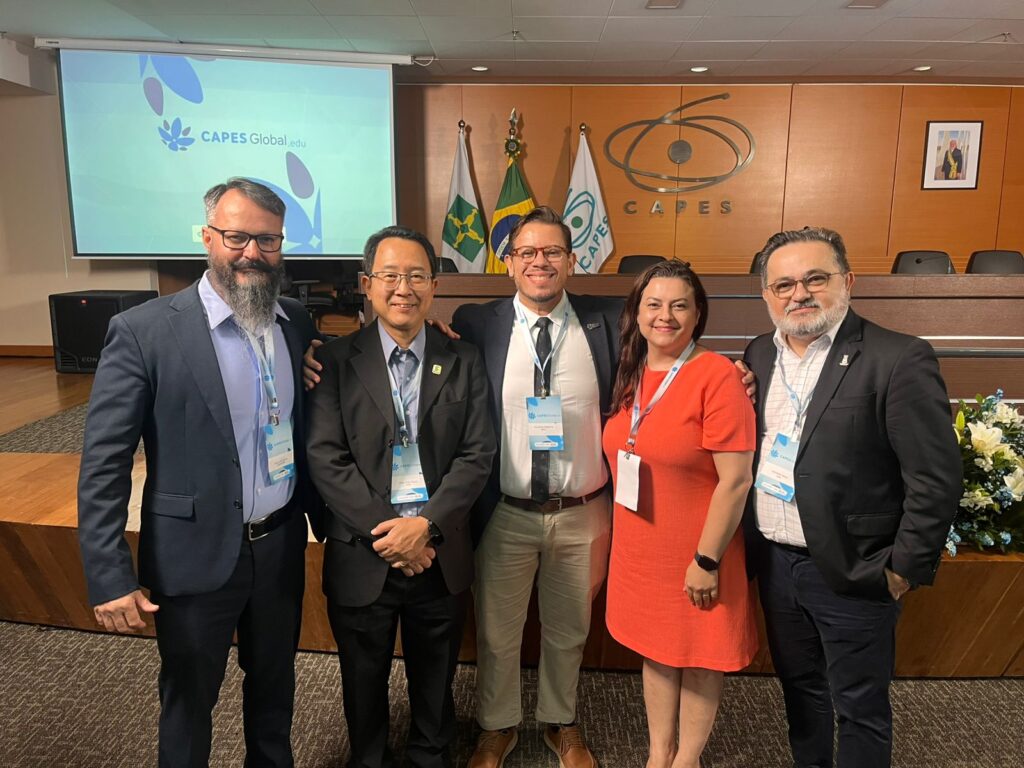
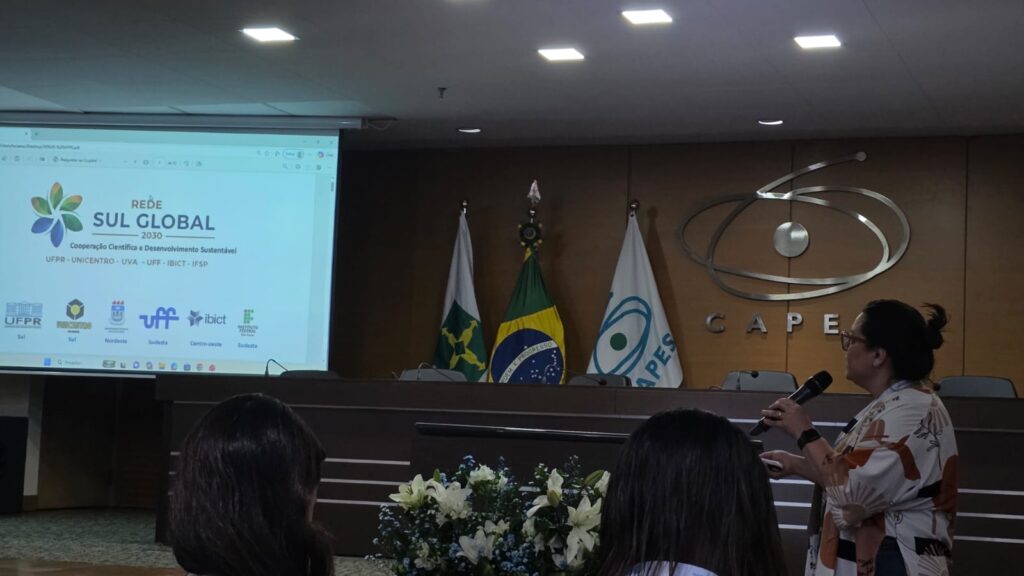
A UFPR participa do Marco Zero do CAPES-Global.edu, realizado nos dias 8 e 9 de abril de 2026 (08/04/2026)
Publicity Material
Coming soon.
Institutionalization
Coming soon.
Gallery
CALL FOR APLICATIONS

Coming Soon
In this section, you can find all the calls for applications related to South Global 2030 Network.
Each one will include information on eligibility, the timeline, selection criteria, and institutional commitments. In addition to the current calls for proposals, the following will be available:
- Document templates
- Record of previous calls, by year and type
TRANSPARENCY
Proposal Approved by CAPES
Strategic Plan
Coming soon.
Administrative Committee
Coming soon.
Reports
Coming soon.
Financial Execution
Coming soon.
PROPOSAL’S DEVELOPMENT RECORD
Timeline
First Steps
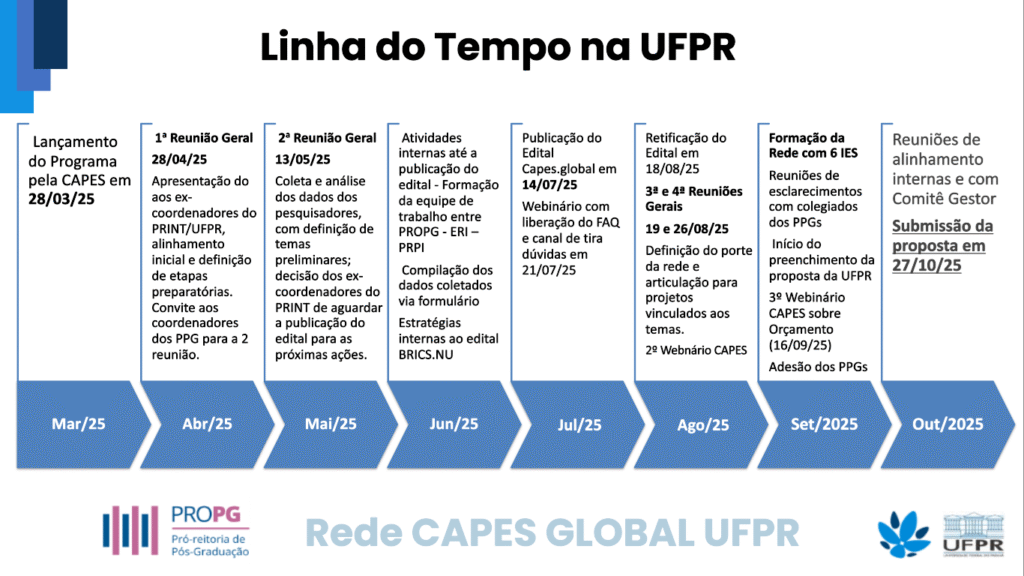
Since the launch of CAPES Ordinance No. 74/2025 on March 28, 2025, which established the Networks for Institutional Internationalization Program – CAPES Global.edu, UFPR has been carrying out a series of preparatory actions for the development of its proposal. In April, the first general meeting with the academic community was held, at which the program’s objectives were presented and the first steps were defined, including gathering information from the Postgraduate Programs (PPGs). In the following months, this survey was systematized through questionnaires applied to the PPGs, allowing for the mapping of existing international partnerships, installed capacities, and potential for expansion.
In May, the second general meeting enabled discussion of the data collected and preliminary definition of strategic themes, with the decision to wait for the publication of the call for proposals to consolidate planning. Subsequently, a Technical Working Group was established, tasked with analyzing the requirements of the call for proposals, organizing the information gathered, and structuring the basis of the institutional proposal.
Stages of Proposal Development
With the publication of the Call for Proposals No. 13/2025 in July, the consolidation phase of the UFPR proposal began, with debates on the composition of the network of partner institutions, eligibility criteria, budget, and linking projects to strategic themes.
The meeting on August 20, 2025, marked the stage of defining the main steps, including setting the number of associated institutions, distributing projects, and providing guidance for nominating new partners.
In September, the participating HEIs in the network were defined and the postgraduate programs were invited to express their interest in joining the proposal. Following the third CAPES webinar on the budget, a series of internal meetings and meetings with the network’s steering committee were held to consolidate the themes and projects and fill in the necessary items in the system.
This process highlights UFPR’s collective effort to coordinate its academic units, coordinate the PPGs, and align the institutional proposal with CAPES Global’s objectives in order to strengthen internationalization, expand strategic partnerships, and ensure leadership on the national and international stage.
In October, the proposal was submitted through the CAPES system by the deadline specified in the call for proposals.
These steps demonstrate UFPR’s collective effort to coordinate its academic units, oversee its graduate programs, and align the institution’s mission with the objectives of CAPES Global, with the aim of strengthening internationalization, expanding strategic partnerships, and ensuring a leading role on the national and international stage.
Justification for composition
The composition of the South Global 2030 Network was strategically designed to maximize scientific complementarity and impact in three priority thematic areas: Inclusion and human development; Conservation and sustainable production; and Frontiers of innovation. Bibliometric analysis of the scientific output of the partner institutions reveals a remarkable synergy that justifies their specific formation.
The network includes 88 graduate programs out of a total of 208 graduate programs based at these institutions, with the capacity for cooperation on multiple fronts in thematic strategies. The regional diversity of the network and the combination of institutions at different stages of internationalization ensure that the benefits of international cooperation are distributed equitably, promoting the reduction of asymmetries and the collective strengthening of the Brazilian higher education system.
This composition not only adds expertise, but multiplies it, creating a research ecosystem capable of addressing complex problems in an interdisciplinary and interinstitutional manner, generating high-impact solutions to contemporary global challenges.
For further information about the CAPES Global.Edu Program, consult the official website: www.gov.br/capes/…/programa-capes-global.edu
Strategic Themes
The definition of strategic themes for the South Global 2030 Network proposal was based on an analysis of the intellectual output of the network’s institutions, which revealed remarkable synergy and complementary expertise that comprehensively and strategically covers the 17 Sustainable Development Goals (SDGs) of the United Nations 2030 Agenda and further enhance the quality of internationalization at the national level.
After a series of meetings between researchers and the Pro-Deans, three thematic axes were defined for conducting the projects:
- Inclusion and Human Development: Integrated Solutions for Health, Education, and Social Justice
- Conservation and Sustainable Production: Socio-Environmental Governance of Land, Water, and Biodiversity
- Frontiers of Innovation: Science and Digital Transformation for a Sustainable Future
In the first theme, UFPR and UFF present robust scientific production in SDG 3 and SDG 4, demonstrating consolidated critical mass in areas such as public health, human resources training, and educational policies. UNICENTRO contributes with strong performance in SDG 3, focused on public health and primary care. UVA and IFSP, in turn, stand out in SDG 4. The former focuses on teacher training and basic education in the Northeast, a priority region for reducing educational inequalities, and the latter on technological education in the Southeast. IBICT contributes with unique expertise in SDG 5 and SDG 16, bringing perspectives on democratizing access to scientific information and knowledge governance, which are essential for social inclusion and equitable human development.
The second theme brings together highly specialized expertise in sustainability. UFPR and UNICENTRO demonstrate excellence in SDG 15, UFPR with research in biodiversity, conservation, and ecosystem management, and UNICENTRO with regional insertion in areas of high biodiversity and research in agroecology and sustainable production systems. UVA complements the theme with research focused on the ecosystems of the northeastern semi-arid region, expanding the diversity of biomes covered by the network and strengthening the capacity to address specific regional environmental challenges.
Finally, in the third theme, IFSP emerges as a strategic partner, presenting exceptional performance in SDG 7 and SDG 9. Its expertise in renewable energy and applied innovation complements the network’s profile, creating opportunities for technology transfer and the development of innovative solutions. UFPR and UFF, with strong performance in SDG 9, contribute with research in engineering, materials science, and biotechnology. IBICT, with its specialization in information science, provides essential knowledge on scientific data management, information infrastructure, and impact metrics, which are fundamental elements for the digital transformation of science and innovation governance.
Equitable Distribution
The “Global South 2030 Network for Scientific Cooperation and Sustainable Development” aims to reduce regional asymmetries by linking research and teaching institutions to strengthen international cooperation with foreign HEIs in the global south, adhering to the themes given by the profile of HEI publications from the Scival/OpenAlex platforms.
Thus, equitable distribution considered both the size of the associates and asymmetry criteria to promote the development of the institutions, combined with the representative proportion of postgraduate programs that were included in the themes, adding additional value to the institutions that remained exclusive to the UFPR network.
For budget calculation purposes, South Global 2030 Network has a total of 209 Postgraduate Programs (PPGs), reaching the top of the budget established annually by Capes Call for Proposals 13/2025. UFPR had 69 eligible PPGs (76% of its total), UFF joined the network with 4 PPGs (5% of its total), IFSP with 2 (50%), UNICENTRO and UVA with 6 PPGs (representing, respectively, 32% and 86% of their total programs), and IBICT with 1 PPG (100%).
UFPR has 41 Postgraduate Programs in theme 1, 43 in theme 2, and 38 in theme 3. All members participate in theme 1, while UNICENTRO, UVA, and IBICT participate in theme 2, and UFF, IFSP, and IBICT participate in theme 3.
A minimum amount of 3% of the budget was established for each HEI, with an additional 1.5% for each extra linked PPG. In terms of budget execution, 25% of the amount was allocated to missions and costs, and 75% to scholarships.
In order for the network to be approved, CAPES requested a 30% budget cut, most of which was applied to the activities of the coordinating institution.
FAQ
Frequently Asked Questions:
- Can a Postgraduate Program (PPG) be in more than one theme?
Yes. A Postgraduate Program is allowed to participate in more than one theme within the same network. However, participation in more than one network is not allowed. PPGs are also allowed to choose not to join CAPES Global.
- Can professional PPGs participate?
Yes. Both professional and academic programs may participate, provided they have grades between 3 and 7 and have already completed at least one evaluation cycle.
- Are PPGs that join CAPES Global prevented from participating in CAPES calls for proposals?
The restriction only applies to CAPES institutional internationalization calls for proposals. Currently, this applies to PDSE and Move La América. In addition to these, any new institutional calls for proposals launched by CAPES in the future will also not allow the participation of postgraduate programs linked to CAPES Global.
- Does joining CAPES Global prevent participation in calls for proposals such as COFECUB and PROBRAL?
No. These calls for proposals are not institutional in nature and, therefore, the participation of PPGs will not be affected. The restriction applies only to existing institutional calls for proposals—PDSE and Move La América—in which PPGs linked to CAPES Global will not be able to compete. Similarly, any new institutional call for proposals launched by CAPES in the future will also not allow the participation of PPGs that are members of CAPES Global.
- Can PRINT projects be used in CAPES Global?
Yes. PRINT projects may be used within the scope of CAPES Global.